
Introduction
Sermon Reflection | Fenton First Presbyterian Church | Fenton, Michigan
November 8th, 2026
Scripture: Joshua 24:14–25 and Ephesians 5:6–21
Sermon Focus: Living in Response to God's Grace
How should we live as followers of Jesus Christ? It's a question that sounds simple until we begin considering all the decisions, relationships, responsibilities, and challenges that fill our everyday lives. We want to do what is right, treat others well, and remain faithful to God. But sometimes we approach Christian living as though it were a list of expectations we must fulfill to earn God's approval.
Sunday's sermon offered a different perspective. Continuing our journey through Ephesians, Pastor Robbie reminded us that the Christian life begins not with what we do for God, but with what God has already done for us.
We do not live faithfully to earn God's grace. We learn to live faithfully because God's grace has already transformed our lives.
And that changes the question from What must I do to be loved by God? to How should I love in response to the love I've already received?
Reflection
Grace Comes First
As we continue exploring Paul's letter to the Ephesians, we are reminded that the Gospel is not a transaction. We cannot earn God's favor through good behavior, generous giving, religious participation, or even our efforts to become better people.
God's grace is already given through Jesus Christ.
Pastor Robbie emphasized that the instructions Paul offers are not a collection of tools for obtaining salvation. They describe what happens when we begin living in the reality of the grace we have already received.
That distinction is important because it changes our motivation. Rather than serving out of fear, obligation, or a desire to prove ourselves worthy, we are invited to respond with gratitude and love.
Christ has already acted on our behalf. He has brought us into a new relationship with God and given gifts to His people so that the Church may grow together in faith and unity.
The question becomes how we will use those gifts and live in the new reality Christ has made possible.
Taking Off the Old and Putting On the New
One of the images Pastor Robbie explored was Paul's description of putting away our old selves and putting on our new lives in Christ.
He compared this transformation to changing clothes. We take off our work clothes when we arrive home, or we dress differently when preparing for a celebration. The change signals that we have entered a different setting, with different expectations and possibilities.
He shared the story of a young child who wouldn't settle into his father's arms until his father removed his work tie. For the child, that small change meant his father was truly home.
In much the same way, Paul describes a new reality for those who belong to Christ.
The habits and behaviors that once shaped our lives no longer need to define us. We can put away dishonesty, greed, bitterness, and harmful speech. Instead, we can practice generosity, kindness, forgiveness, and compassion.
Paul's instructions are practical. Rather than stealing, work honestly so there is something to share with those in need. Rather than speaking words that tear others down, speak in ways that build them up.
The new life Christ gives us is meant to become visible in the ordinary choices we make.
From Lost to Found, Darkness to Light
Pastor Robbie also shared a childhood memory of becoming lost at SeaWorld. As a young boy, he wandered away from his parents, became frightened, and sat down crying until someone helped reunite them.
The experience offered another image of God's grace: moving from being lost to being found.
When we are lost, we may not know where to turn or what direction to take. But being found changes everything. We are no longer alone or uncertain about where we belong.
Paul uses another powerful image when he describes moving from darkness into light.
Pastor Robbie humorously recalled trying to navigate his basement without turning on the lights, sometimes with painful results. In darkness, we stumble over things we cannot see. But once the light is turned on, those obstacles become visible, and we can move with greater confidence.
Christ's light changes the way we see and understand our lives. We begin recognizing behaviors, attitudes, and choices that once seemed normal but no longer belong in the life God is creating within us.
And perhaps most importantly, we begin to see that we don't have to approach life as though we are entirely on our own.
We are found. The light is on. We belong to Christ and to one another.
A New Way of Living Together
The transformation Paul describes doesn't stop with individual behavior. It reaches into our relationships, families, and communities.
Sunday's sermon explored some of the more challenging passages in Ephesians concerning husbands and wives, parents and children, and enslaved people and their masters within the Roman world.
Pastor Robbie encouraged us to consider these passages within their larger context, particularly Paul's instruction to be subject to one another out of reverence for Christ.
In a society where power and authority were distributed unequally, Paul addressed people who were often overlooked, including women, children, and enslaved individuals. He also placed responsibilities upon those who held greater power.
Husbands were called to love their wives as Christ loved the Church, giving Himself for her. Fathers were instructed not to provoke their children. Masters were reminded that they, too, answered to the same Lord, who shows no partiality.
Pastor Robbie was clear that slavery is wrong, while acknowledging the difficulty of reading these passages within the realities of both the ancient world and our own history.
The larger message was that our relationships should reflect the character of God.
Following Jesus changes how we understand authority, responsibility, care, and the dignity of others. We are not called to use relationships merely for our own benefit, but to approach one another with humility and love.
The Gospel transforms not only who we are, but how we treat the people around us.
From Isolation to Belonging
Another image from Sunday's sermon was the movement from being alone, like orphans, into belonging to a household.
Through Christ, we become part of God's family.
That belonging carries both comfort and responsibility. We have a place within the body of Christ, and we are called to recognize the place others have as well.
The Church is not simply a gathering of individuals who happen to believe similar things. It is a community in which people with different experiences, gifts, abilities, and needs are brought together through God's grace.
When we encourage one another, share our resources, offer forgiveness, or support someone through difficulty, we reflect the love of the God who has welcomed us.
We are not meant to live this new life in isolation.
Living the Message
During Children's Time, Pastor Robbie told the story of Elisha and a group of hungry prophets who prepared a pot of stew. When an unfamiliar ingredient made the food unsafe, it seemed that the entire meal had been ruined.
But through God's work, the stew was restored.
The children were reminded of a powerful truth: God can take things that seem ruined and make them new.
That message connects beautifully with the sermon. Paul describes the ways our lives are transformed through Christ: from death to life, darkness to light, lost to found, and bondage to freedom.
These are not simply beautiful images. They remind us that our brokenness does not have to be the end of our story.
We live in a world where relationships become strained, people hurt one another, and circumstances can leave us feeling discouraged or disconnected. We may recognize things within ourselves that we wish were different.
But the good news is that God is already at work bringing healing, renewal, and new life.
That doesn't mean every problem disappears or that every relationship can be easily repaired. It means that God's grace offers us a new way to respond.
We can choose forgiveness instead of holding on to bitterness. We can practice generosity instead of selfishness. We can speak with kindness instead of allowing frustration to shape our words. We can seek understanding rather than insisting upon our own way.
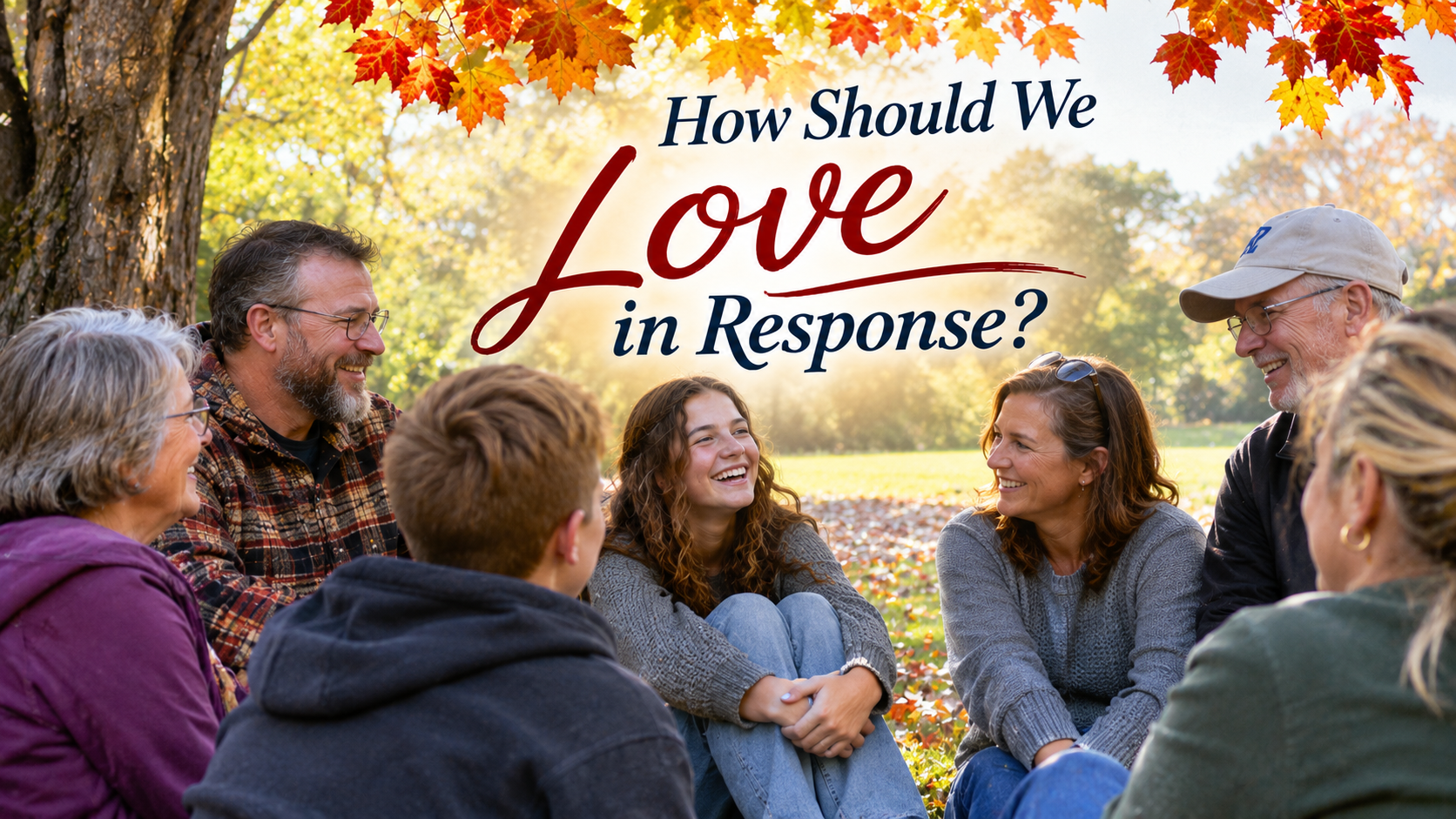
Near the end of the sermon, Pastor Robbie shared that he had accidentally written the sermon title as How Should We Love in Response? instead of How Should We Live in Response?
But perhaps that wasn't such a mistake after all.
Because the heart of Christian living is learning how to love.
We have been loved by God. Now we are invited to let that love shape how we live with one another.
A Challenge for the Week
This week, consider three questions:
Am I living as though I must earn God's love, or am I responding to the grace I've already received? Think about what motivates your faith, service, and relationships. Where might you need to replace obligation or fear with gratitude?
What part of my old way of living might God be inviting me to set aside? Perhaps it is a habit, an attitude, a lingering resentment, or a way of speaking that doesn't reflect the person you are becoming in Christ.
How can I make God's love visible in one relationship this week? Consider someone who may need patience, encouragement, forgiveness, understanding, or simply the reassurance that they belong.
Choose one intentional action that reflects the new life Christ has given you.
And when you find yourself struggling, remember that transformation is not something you must accomplish through your own strength. God's grace has already begun the work.
You are loved. How will you love in response?
This Week's Prayer
Gracious and loving God, thank You for the gift of Your grace and for the new life You have given us through Jesus Christ.
Forgive us when we forget that Your love comes before our efforts and when we try to earn what You have already freely given.
Help us put away the habits and attitudes that keep us from living fully in Your light. Teach us to speak with kindness, act with generosity, offer forgiveness, and treat one another with the dignity and compassion You have shown us.
When we feel lost, remind us that we have been found. When darkness surrounds us, help us remember that Christ is our light. When we feel alone, draw us closer to the family of faith You have given us.
May our homes, relationships, congregation, and community reflect Your love. Continue Your work of renewal within us, and help us respond to Your grace with lives shaped by gratitude, humility, and compassion.
Amen.
Join Us This Sunday
If you're looking for a church in Fenton, Michigan, or searching for a welcoming Christian community where you can grow in faith, ask honest questions, and experience meaningful worship, we'd love to welcome you.
At Fenton First Presbyterian Church, we seek to know Jesus Christ and grow, share, and serve as His disciples. Whether you've attended church your whole life or you're exploring faith for the first time, there is a place for you here.
Join us this Sunday as we continue discovering God's Word together and learning how Christ meets us in every season of life—even in the midst of the storms.
Come as you are. We look forward to welcoming you.
About Sermon Beyond Sunday: Each reflection is created from the pastor’s sermon transcript and uses AI-assisted technology to help adapt the spoken message for continued reflection throughout the week. The Scripture, message, and theological themes are drawn directly from the sermon.