
Introduction
Sermon Reflection | Fenton First Presbyterian Church | Fenton, Michigan
Pastor Lindsey Carnes
September 20th, 2026
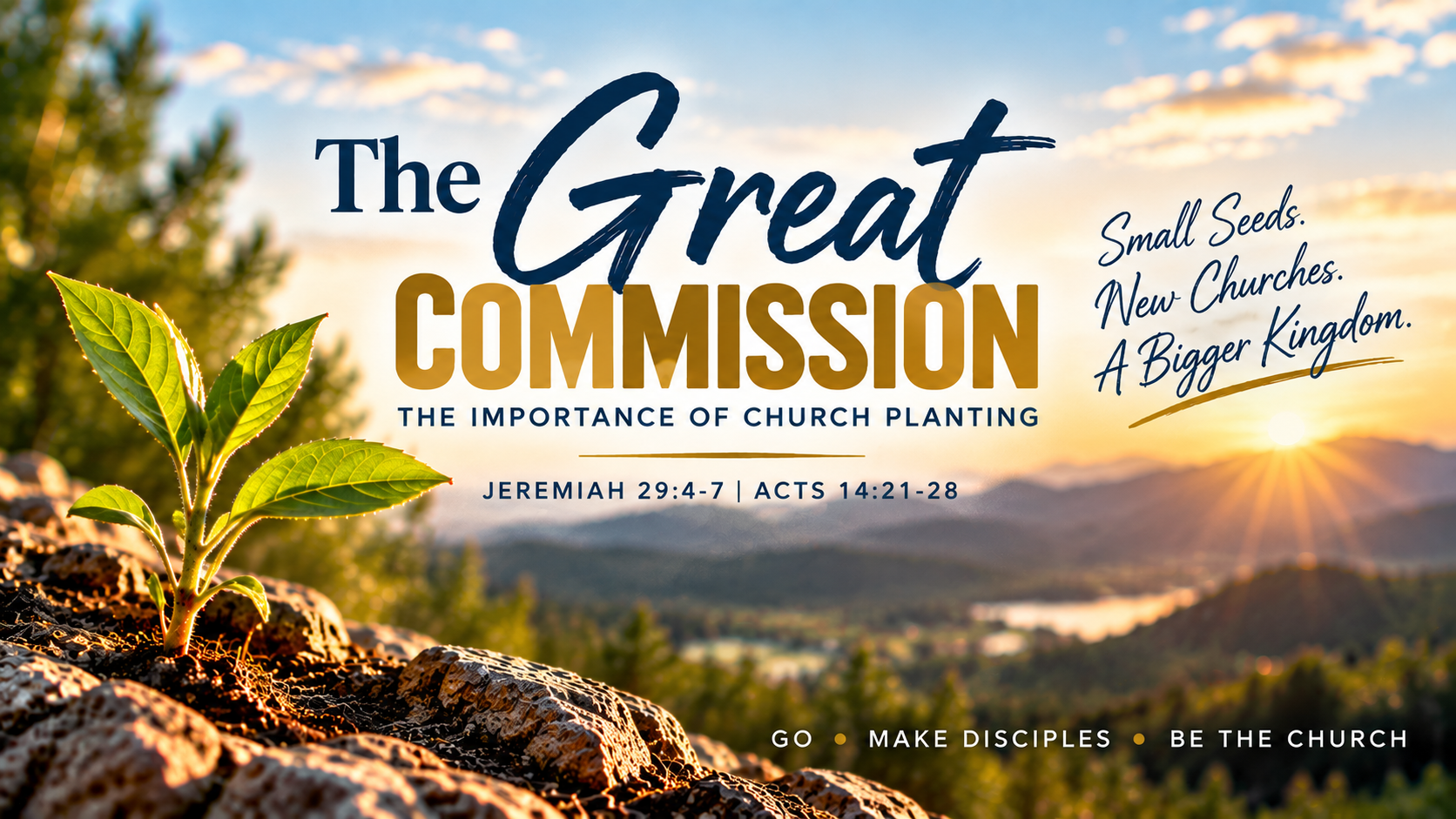
Scripture: Jeremiah 29:4–7 and Acts 14:21–28
Sermon Beyond Sunday: The Great Commission - The Importance of Church Planting
What comes to mind when you hear the words church planting?
Maybe you picture a brand-new congregation meeting in a school gym or storefront. Maybe you think about missionaries traveling somewhere far away. Or perhaps you wonder why we need new churches when there are already churches with empty seats.
But Sunday's message invited us to look at church planting through a different lens—not simply as starting new institutions, but as part of Jesus' call to make disciples.
That call isn't only about bringing someone to a moment of belief. Following Jesus is a journey, and disciples need other disciples. We need places where faith can take root, be nurtured, challenged, strengthened, and lived together.
In other words, the Great Commission isn't simply about reaching people.
It's about becoming a community where people can grow in Christ.
Reflection
Fenton First Presbyterian Church itself began with something small.
Nearly 190 years ago, it started as a Sunday school. A church grew from that beginning, and before the congregation had even become what we recognize today, it helped plant another church in Holly.
Our own history reminds us that the church was never meant simply to preserve what already exists. From the beginning, Christians have carried the Gospel outward, formed new communities, and made room for new disciples.
We see that movement in Acts. Paul and Barnabas proclaimed the good news, made disciples, strengthened believers, appointed leaders, and eventually returned to tell the church all that God had done and how God had “opened a door of faith” for others.
The pattern wasn't simply:
Tell someone about Jesus and move on.
It was proclamation, discipleship, community, leadership, encouragement, and continued growth.
Sunday's sermon reminded us why that matters. A decision to follow Jesus can be the beginning of faith, but discipleship takes time. We become the people Christ is shaping us to be within communities that worship together, learn together, serve together, and hold one another up.
Jesus Himself said:
“By this everyone will know that you are my disciples, if you have love for one another.”
Our life together is part of our witness.
People don't only encounter the Gospel through what Christians say. They can encounter it through a community where people forgive one another, serve together, welcome newcomers, care for those who are hurting, make room for different generations, and use their gifts for something larger than themselves.
That also means established churches have an important question to ask.
Not simply:
How do we keep our church going?
But:
How is God calling us to participate in the growth of His Kingdom?
Those are not always the same question.
Sunday's message challenged the fear that another church's growth somehow means our loss. God's Kingdom isn't a competition for members, programs, or territory. If people who weren't connected to a community of faith are discovering Christ, growing as disciples, and finding a place to worship and serve, that is something the whole Church can celebrate.
A Kingdom mindset asks us to look beyond our own walls.
It also asks us to look honestly within them.
Church plants often have to think intentionally about everything they do because everything is new. Their mission influences their worship, ministries, leadership, communication, hospitality, and the ways they connect with their community.
Established churches can learn from that.
Over time, it's easy for programs and traditions to accumulate until we forget to ask why we do them. Some traditions are beautiful and deeply meaningful. Others may simply be habits we've stopped noticing.
The question isn't whether something is old or new.
The question is:
Does this help us fulfill the mission Jesus has given us?
Living the Message
The children's message gave us a wonderfully simple picture of how this works.
A tiny basil seed was placed into soil. But planting it wasn't the end. It needed water, sunlight, care, and time before it could grow.
Faith can be like that.
Sometimes God begins with something very small—a conversation, an invitation, a question, an act of kindness, a prayer, or someone's first uncertain step toward church.
We may plant the seed, but then comes the work of tending it.
That's one reason Christian community matters so much. People need places where questions are welcome, relationships can form, gifts can be discovered, and faith has room to grow.
And sometimes growth doesn't look the way we expect.
During the children's message, Pastor Robbie held up an old, shriveled potato that didn't look particularly promising. Yet put it in the ground, and even that potato can produce new growth.
God grows people in all sorts of ways.
Our responsibility isn't to decide ahead of time who looks promising enough, young enough, experienced enough, church-like enough, or ready enough.
Our calling is to keep planting, watering, welcoming, encouraging, and trusting God with the growth.
That applies to new churches.
It applies to established churches.
And it applies to each one of us.
A Challenge for the Week
This week, consider two questions:
Where do I see God opening a door of faith?
It might be in someone who has started asking questions, a new person entering the life of the church, a younger generation finding its voice, or an opportunity for FFPC to serve its neighbors in a new way.
Then ask:
What can I do to help someone's faith grow?
Maybe you can invite someone.
Maybe you can serve in a ministry you've been watching from the sidelines.
Maybe you can learn the name of someone new.
Maybe you can encourage a younger person.
Maybe you can listen to someone whose experience of church is very different from yours.
Or perhaps God is asking you to reconsider something simply because you've always thought, “That's the way we've done it.”
We don't have to know exactly what God will grow from what we plant.
We simply need to leave part of our hearts open to where God may be leading.
This Week's Prayer
God of growth and new beginnings,
Thank You for those who planted seeds of faith before us—for congregations, teachers, pastors, families, friends, and faithful disciples who made room for us to know You.
Keep us from becoming so concerned with preserving what we have that we lose sight of the mission You have given us. Teach us to celebrate whenever Your Kingdom grows, whether that growth happens within our congregation, in another church, or somewhere we never expected.
Give us courage to examine our life together honestly. Show us what should be treasured, what may need to change, and where You are opening new doors of faith.
Help us plant generously, nurture patiently, welcome graciously, and serve faithfully. Use our gifts for the good of Your Church and our neighbors. And when we cannot yet see what You are growing, give us faith to trust that the work belongs ultimately to You.
Make us not only people who believe in Jesus, but disciples who grow together, love one another, and invite others into the life You offer.
Join Us This Sunday
If you're looking for a church in Fenton, Michigan, or searching for a welcoming Christian community where you can grow in faith, ask honest questions, and experience meaningful worship, we'd love to welcome you.
At Fenton First Presbyterian Church, we seek to know Jesus Christ and grow, share, and serve as His disciples. Whether you've attended church your whole life or you're exploring faith for the first time, there is a place for you here.
Join us this Sunday as we continue discovering God's Word together and learning how Christ meets us in every season of life—even in the midst of the storms.
Come as you are. We look forward to welcoming you.
About Sermon Beyond Sunday: Each reflection is created from the pastor’s sermon transcript and uses AI-assisted technology to help adapt the spoken message for continued reflection throughout the week. The Scripture, message, and theological themes are drawn directly from the sermon.